
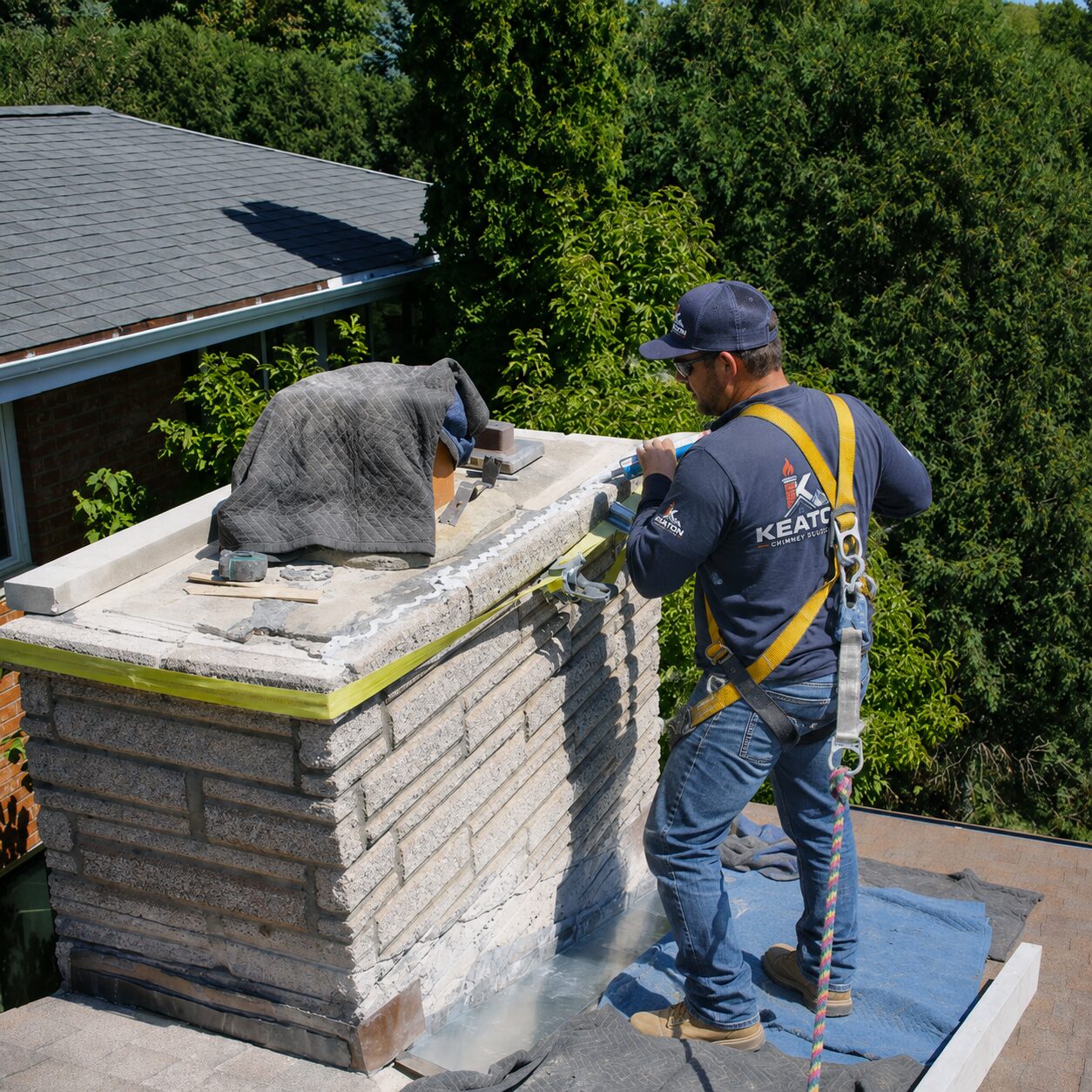
Masonry
Chimney Tuckpointing & Mortar Repair
Mortar joints are the first part of a chimney to wear out. Tuckpointing removes deteriorated mortar and repacks the joints, restoring the surface that keeps water from tracking into the wall.
What tuckpointing actually is
Over time, weather erodes the mortar between bricks, leaving recessed or missing joints. Tuckpointing (also called repointing) grinds out the failed mortar and fills the joints with fresh mortar, restoring both the look and the water resistance of the masonry.
Why it's worth doing on schedule
Open joints let water into the wall — and in Colorado that water freezes and expands. Keeping the joints sound is one of the simpler ways to slow masonry deterioration and delay bigger repairs.
Signs the joints need repointing
- Recessed, cracked, or missing mortar
- Mortar that crumbles or can be scratched out by hand
- Gaps you can see daylight or moisture through
- Loose bricks that move slightly
- Water staining along joint lines
What our service covers
- Removal of deteriorated mortar
- Repacking joints with fresh mortar
- Color and profile matching where practical
- Repointing above and below the roof line
- Pairing with waterproofing where useful
Frequently asked questions
Is tuckpointing the same as repointing?
The terms are often used interchangeably for restoring mortar joints. The goal is the same: remove failed mortar and repack the joints.
How often do joints need repointing?
It depends on exposure, mortar, and age. An inspection is the best way to tell whether your joints are still sound.
Related services

Talk to a Colorado chimney family
Call or request service and we'll help you figure out the right next step for your chimney or fireplace.