Safety & Maintenance
How Often Should You Have Your Chimney Inspected in Colorado?
A chimney can look perfectly normal from the living room while problems are developing higher in the system. That is one reason regular inspection matters, especially in Colorado, where a chimney may spend months exposed to snow, wind, moisture, large temperature swings and periods of heavy winter use.
A practical baseline for most homeowners is an inspection at least once a year. The Chimney Safety Institute of America points to NFPA 211 guidance calling for annual inspection of chimneys, fireplaces and vents for soundness, deposits and proper clearances, with cleaning and repairs performed when needed. The U.S. Fire Administration also advises having chimneys cleaned and inspected each year by a professional.
That does not mean every chimney needs the same work every year. Inspection and cleaning are related, but they are not identical. A chimney may be inspected and found relatively clean. Another may have significant creosote, an obstruction, moisture damage or a deteriorated component that needs attention.
Why annual inspection makes sense in Colorado
Colorado adds a few practical reasons not to ignore the chimney between burning seasons.
First is moisture. Snow and rain can enter through an open or damaged top, failed crown, deteriorated masonry or flashing problems. Water is especially hard on porous masonry because moisture can move into brick and mortar and later be affected by freezing temperatures.
Second is temperature cycling. Masonry expands and contracts with changes in temperature and moisture. The National Park Service identifies freeze-thaw action as one of the conditions that can contribute to cracking and deterioration in masonry. A small defect that was barely visible one season may look very different after another winter.
Third is use. Some Colorado homeowners use a fireplace only occasionally. Others use a wood stove or fireplace heavily through winter. The more fuel you burn, the more important it becomes to monitor deposits and venting conditions.
Inspection is not only about creosote
Many homeowners think a chimney inspection simply means looking for soot. A proper evaluation is broader.
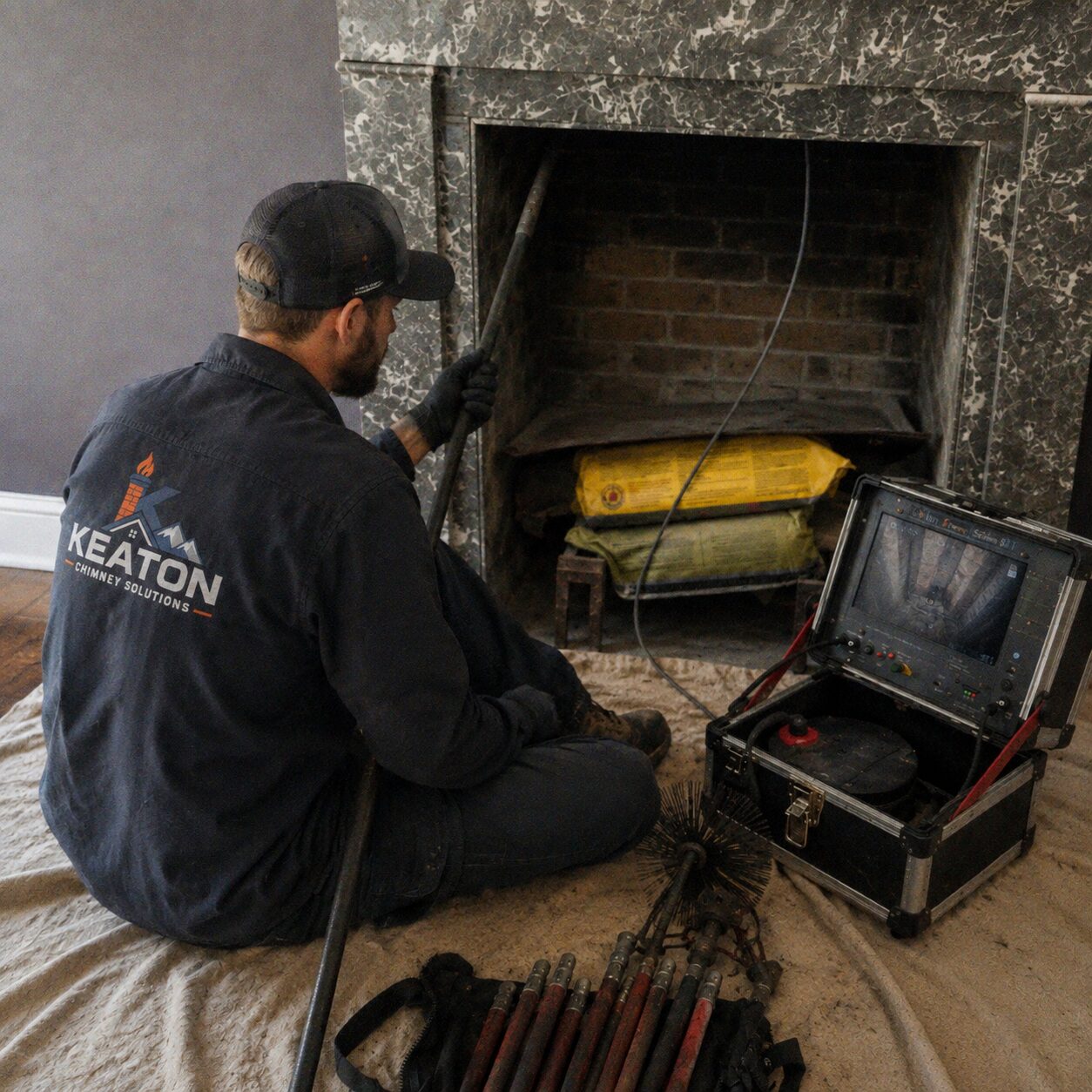
Depending on the type and level of inspection, the technician may look at accessible portions of the fireplace or appliance, damper, smoke chamber, flue, liner, chimney exterior, crown, cap, flashing, chase cover, visible masonry and termination area. The goal is to identify conditions that may affect safe use or the ability of the system to vent combustion products properly.
Potential findings can include:
- Creosote or other combustible deposits
- Obstructions or nesting material
- Cracked or deteriorated flue components
- Missing or damaged chimney caps
- Crown cracking
- Deteriorated mortar joints
- Spalling brick
- Rust or corrosion on metal components
- Water entry or staining
- Flashing problems
- Damage after a chimney fire
- Changes to the appliance or venting system that call for a more detailed evaluation
When you should not wait for the annual appointment
An annual inspection is a baseline, not a reason to ignore warning signs. Schedule an evaluation sooner if you notice smoke entering the room, unusual odors, water in or around the fireplace, loose or falling masonry, rust, pieces of tile or debris in the firebox, a damaged cap, signs of animal entry, or a significant change in how the fireplace drafts.
You should also consider an inspection after a suspected chimney fire. Chimney fires are not always dramatic. Some burn slowly and may go unnoticed, yet high temperatures can damage flue tiles, joints or metal components. If you believe a chimney fire may have occurred, do not assume the system is ready for continued use just because the fire is out.
Buying or selling a Colorado home with a fireplace
A fireplace can be an attractive feature during a home purchase, but appearance alone tells you little about the condition of the venting system. A more detailed inspection may make sense when a property changes ownership, when the history of the system is unknown, or when the appliance or fuel type has changed.
This is particularly important with older masonry chimneys, remodeled homes, fireplace inserts and properties where the chimney has been altered over time.
Denver, Colorado Springs and Fort Collins are not identical
The basic maintenance principles are similar across the Front Range, but local conditions and rules differ.
Denver-area homeowners also need to be aware of Colorado's wood-burning restrictions on certain high-pollution days in applicable portions of the seven-county Denver-Boulder metro area below 7,000 feet, subject to exemptions in state regulation.
Colorado Springs homeowners may deal with a different combination of elevation, snowfall and severe weather, and fireplace or stove installation work can be subject to Pikes Peak Regional Building Department permitting.
Fort Collins has its own building and air-quality programs, and the city specifically identifies fireplaces, fire pits and wood-burning stoves among permit categories. Installation requirements should always be checked before starting a project.
The best time to schedule
For homeowners who rely on a fireplace in winter, late spring through early fall can be a convenient time to inspect and repair the system before demand rises. But there is no rule that says you must wait for fall. If something looks wrong in February, inspect it in February.
The goal is simple: know the condition of the chimney before you depend on it.
Bottom line
For most Colorado homeowners, an annual chimney and fireplace inspection is a sensible baseline. Cleaning should be performed when deposits or conditions require it, and repairs should be based on what the inspection actually finds.
A yearly inspection is also an opportunity to catch water entry, masonry deterioration, venting issues or damaged components before they become larger problems.
Need a chimney inspection in Colorado? Keaton Chimney Solutions serves Denver, Colorado Springs, Fort Collins, and surrounding communities. Call 720-734-5373.
Does a chimney need to be cleaned every year?
Not automatically. Annual inspection is the baseline; cleaning frequency depends on deposits, use, fuel, appliance and the condition found.
Can I inspect a chimney myself from the fireplace opening?
You can notice obvious signs such as debris, staining or damage, but much of the venting system is not visible from the room.
Should I inspect a chimney if I rarely use it?
Yes. Lack of use does not prevent moisture, animals, corrosion or deterioration.
Need help with a chimney or fireplace in Colorado? Keaton Chimney Solutions serves Denver, Colorado Springs, Fort Collins, and surrounding communities. Call 720-734-5373.